


16 min read
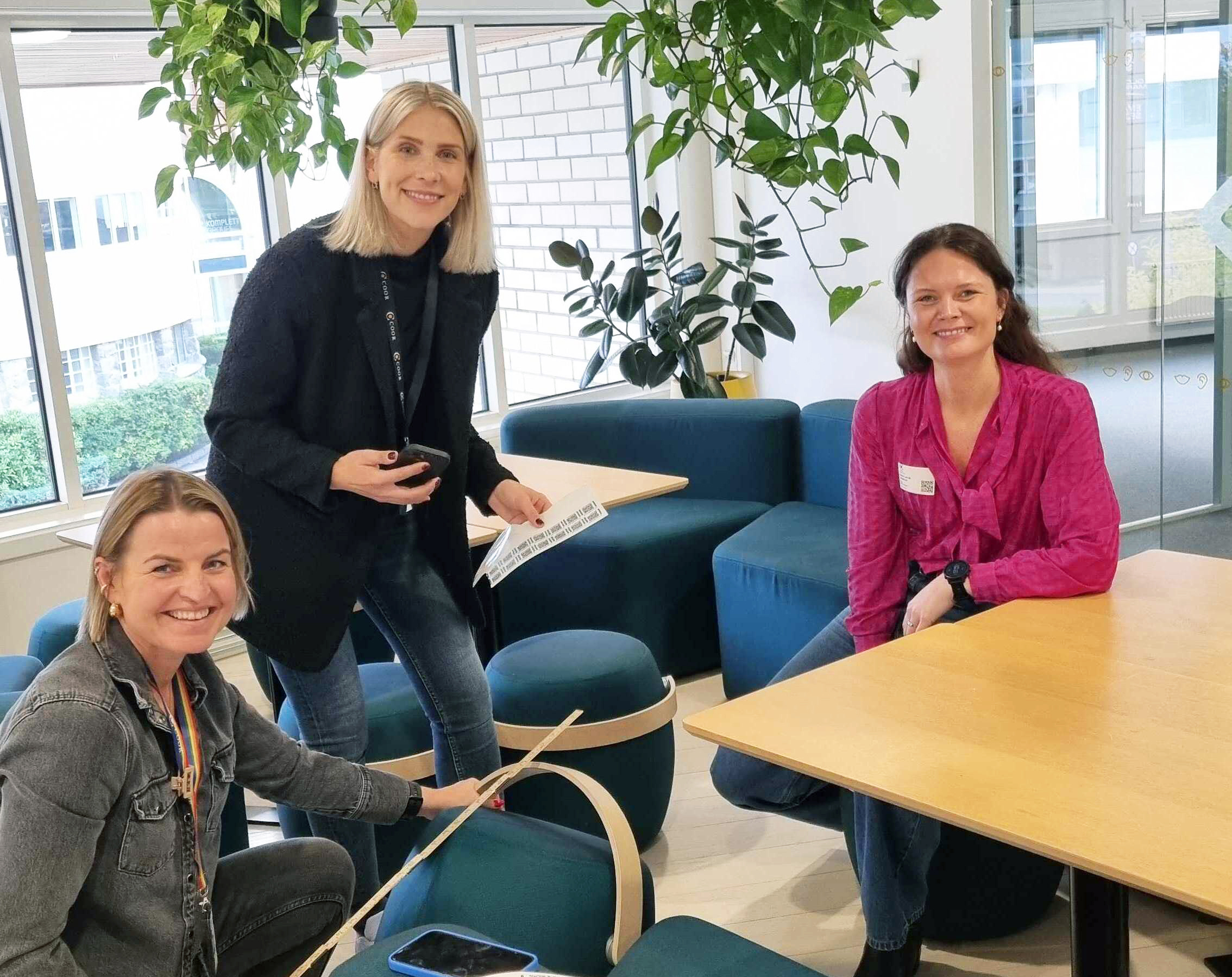
When Coor, one of the Nordic region’s leading facility management providers,
were set to relocate their offices in Stockholm and Oslo, they focused on reusing existing furniture and fixtures rather than purchasing everything new. The result was significant environmental and cost savings, while existing furniture was given new life through smart adaptations and redesigns.
In our webinar "Move smart - Operate Circular" Marthe Hiorth and Yvonne Lindahl Czapka from Coor shared their experiences and best advices for companies looking to succeed with reuse.
Reuse that saves costs and creates great workplaces
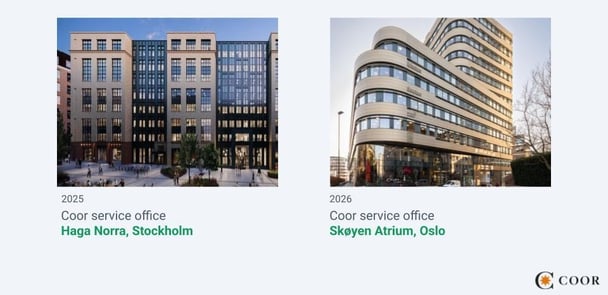
In Stockholm, Coor set an ambitious goal: At least 80% of the furnishings in the new office at Haga Norra would be reused.
When the office, with 300 employees, opened in February 2025, they had exceeded their goal. A full 86% of the furnishings consisted of reused, redesigned, or secondhand furniture, resulting in savings of approximately 600 000 EUR and a reduction of 49 metric tons of CO₂ by minimizing the need for new furniture.
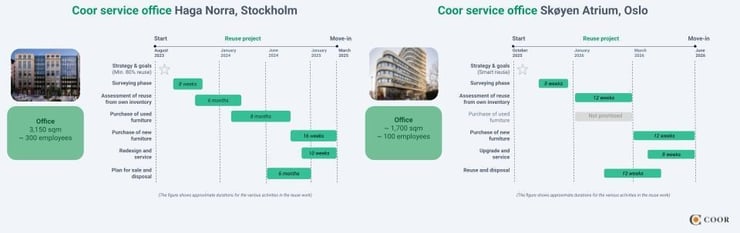
Drawing on the experience from Sweden, Coor carried out a similar project in Oslo when they moved into Skøyen Atrium with 100 employees in June 2026. Here, they had only eight months to complete the project, compared to a year and a half in Stockholm. Nevertheless, they achieved a 60% reuse rate for office furnishings and estimated savings of approx. 200 000 EUR in reduced procurement costs and 23 metric tons of CO₂ avoided.
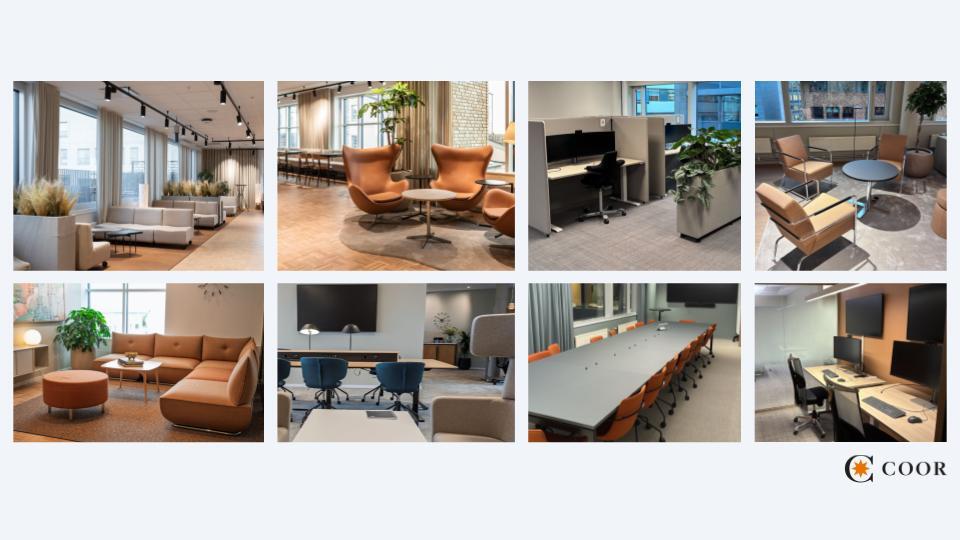
Feedback from employees has also been very positive. The offices are perceived as modern and functional.
“The feedback is that people don’t quite see what’s been reused and what’s new” - Yvonne Lindahl Czapka
(Senior Workplace Consultant / Interior Architect MNIL - Coor)
 Old furniture can be made better than new
An important part of Coor’s success has been seeing potential in furniture that others might have thrown away.
Among other things, Coor had many height-adjustable desks that were too large for the new office. Instead of buying new desks, they contacted the manufacturer, ordered new support beams, and adjusted the desks from 180 to 120 centimeters in width.
At the office in Oslo, the frames of as many as 90% of the conference tables were reused, while the tabletops were adapted to new needs.
Older office chairs, storage cabinets, and lounge furniture were also given new life. Worn-out chairs were reupholstered and fitted with new padding, while older office cabinets received new fronts, modified interiors, and modern RFID locks.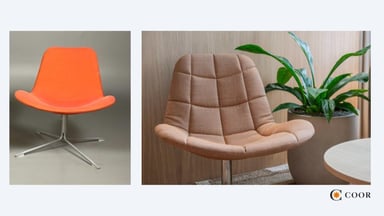 A good example is an old orange lounge chair that had been used very little and which many employees thought should be discarded. After being reupholstered and given a new cover, the chair turned out even better than it was when new.
“The feedback is that users don’t even recognize the chair.
Today, the chair is often used, and they find it very comfortable.”
-Yvonne Lindahl Czapka
(Senior Workplace Consultant / Interior Architect MNIL - Coor)
These examples show that repurposing doesn’t have to mean compromising on design or functionality. With the right expertise, existing furniture can be adapted to new ways of working and given many more years of life.
How to Successfully Reuse Furniture in Relocation Projects
Based on experiences from Stockholm and Oslo, Coor highlights five key tips:
1. Start the surveying of assets early
The sooner the company gets an overview of existing furniture, the easier it will be to plan for reuse. Then explore the secondhand market to meet any remaining needs before supplementing with new furniture. In Stockholm, Coor set a deadline of about 16 weeks before moving in to finalize the last purchases. In Oslo, the deadline was 12 weeks.
2. Use expert knowledge to identify opportunities
A piece of furniture that looks worn or outdated may still be of high quality and have a long lifespan. Coor recommends involving experts who can assess quality, repair options, and how the furniture can be adapted to new needs.
3. Focus on volume
If you have limited time, you should start with the pieces of furniture you have many of, and where reuse yields the greatest savings. Coor specifically highlights desks, office chairs, desk partitions, and conference tables. Metal frames, in particular, are worth keeping, as they account for a large portion of the desks's carbon footprint.
4. Use a surveying and inventory tool and ensure solid data foundation
Start by figuring out what the company already has and what can be repaired or redesigned. Be sure to document the manufacturer, dimensions, condition, any damage, and take clear photos.
“It can be done with an Excel spreadsheet, but I can promise you it will be chaos. We’ve seen it happen far too many times.”
- Marthe Hiorth (Director of Operational Excellence, IFM & Workplace - Coor)
With the digital overview in Loopfront, Coor made it easier to assess what could be reused, plan the future placement, and document the results.
5. Involve employees
Good communication is essential for fostering understanding and engagement. Showcase the furniture that will be given a new lease on life, share before-and-after photos, and explain the savings the project generates. When employees understand the concept behind reuse and see the results, it becomes easier to increase enthusiasm for reuse in the new facilities.
From Relocation Project to Circular Facility Management
For Coor, reusing furniture doesn’t stop when the relocation project is complete.
Through the inventory surveyed in Loopfront, the company has gained a digital overview of furniture and fixtures that can also be used in future operations. The goal is to be able to move furniture between offices, maintain existing fixtures, and explore internal reuse opportunities before making new purchases.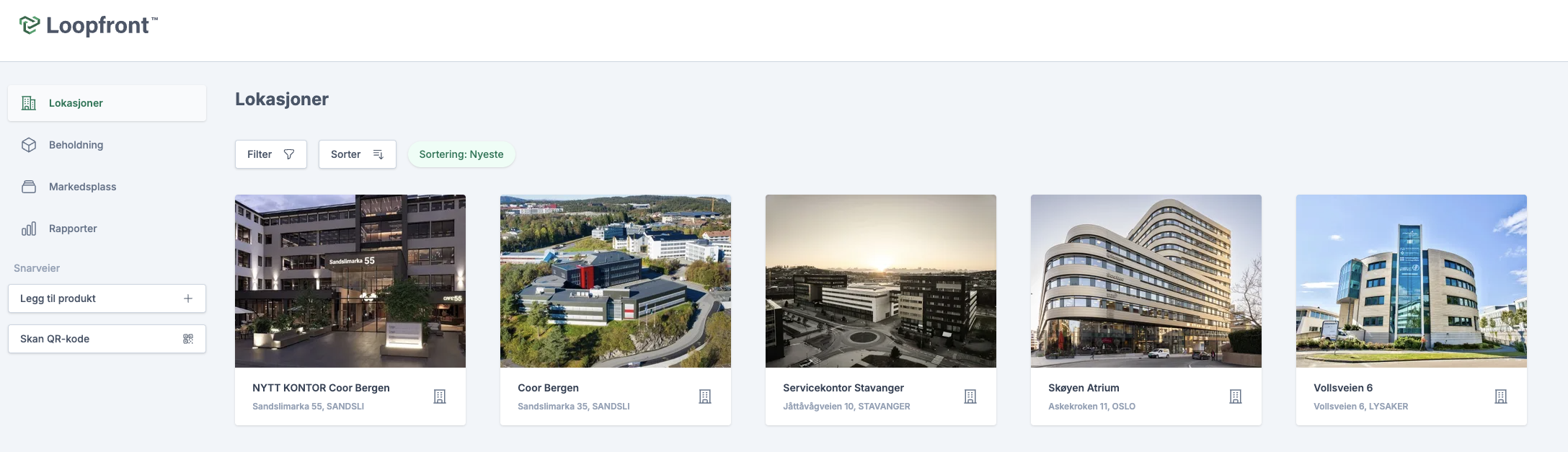
“We’ve used Loopfront in this project and are very satisfied with it. Access to data and insights along the way makes it easier to track progress, and it helps keeping the motivation high.”
—Yvonne Lindahl Czapka
(Senior Workplace Consultant / Interior Architect MNIL Coor
If reuse is going to be a part of daily operations, someone must be responsible for keeping the overview up to date. Marthe from Coor highlights the Facility management and Workplace roles as the natural owners of the work involving furniture and fixtures, ideally in collaboration with a facility management provider. For building materials, the real estate department will normally be the natural point of contact.
A relocation project can thus be the start of something bigger: a more systematic management of the company’s assets, where furniture and equipment are used longer, maintained better, and reused across locations.
"I think those who are facing a relocation project are in a very fortunate position. Because then you have something concrete. You have a need." - Marthe Hiorth (Director of Operational Excellence, IFM & Workplace - Coor)
|
Are you facing an upcoming relocation project or are you wondering how circularity can become part of your Facility Management delivery? |

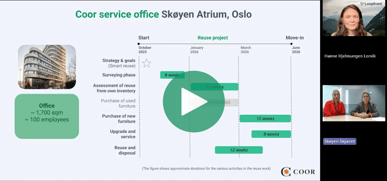 Watch the webinar with Coor
Want to see more examples of how Coor has redesigned furniture, learn more about their experiences with relocation, and get practical advices on reuse and facility management?
Watch the recording of the webinar here
|
|
 Would you like to learn more about how Loopfront can help your company implement reuse systematically?
