


5 min read
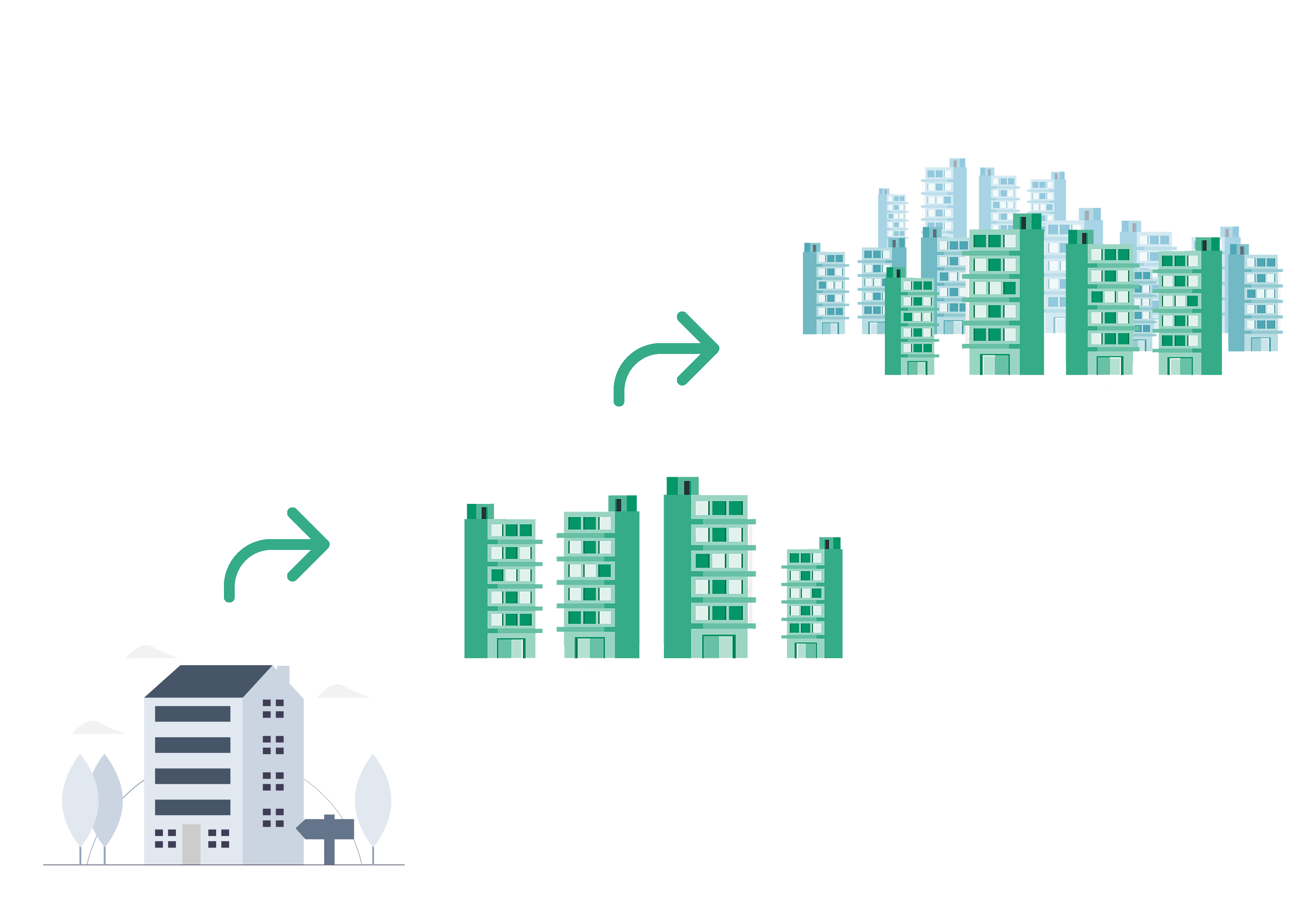
Loopfront has followed the development of reuse closely over several years. Through collaboration with municipalities, public organizations and private actors, we have seen how needs, maturity and solutions have changed over time. In this article, we share how the development of marketplaces for reuse has looked from our point of view, and what patterns recur among those who succeed.
How reuse is evolving in practice in Norwegian municipalities
Reuse has gone from being enthusiast-driven and local to becoming a structured part of how public organizations manage resources. At the same time, we see that the solutions are maturing. Instead of opting for either internal or external sharing, more and more are working with step-by-step publication of reusable goods.
Reuse often starts internally
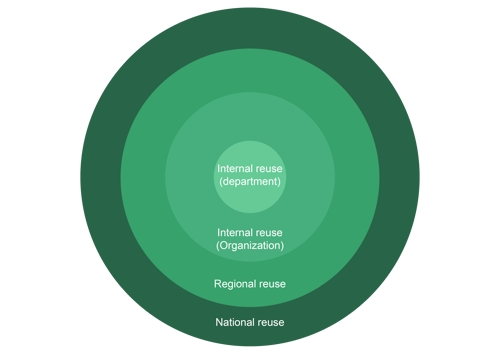
For many, the first step is to ensure that their own needs are met. In Oslo municipality, schools can publish furniture and equipment first for other schools on their internal marketplace in Loopfront. Items are used where the needs are similar, and the threshold for sharing is lower. After a few days, if no one has ordered, the marketplace listings are automatically opened to all departments in Oslo municipality. This model makes it easier to get the whole organization on board.
Taking reuse to the organizational level
The next step is to look at the entire business as a whole. Trondheim Municipality first lists their items on their internal marketplace in Loopfront, where all employees in the municipality can view and order across departments. If they are not reused within a given period, they are automatically published on Loopfront's public marketplace so that they can be ordered by other companies.
The result is better flow, less manual work and a higher probability that objects actually get a new life.
Regional collaboration gives increased effect
The five Norwegian municipalities Elverum, Våler, Tolga, Alvdal and Rendalen have chosen to work together to make reuse easier and more systematic in the region. Their solution is to first share reusable items internally in their own municipality, and what is not reused internally is made available on their regional marketplace in Loopfront. In the future, more of the neighboring municipalities will also have access to the regional marketplace.
This gives the municipalities control over their own resources, while contributing to greater regional value creation. For many smaller municipalities, this is an important step towards increasing the volume and impact of their reuse efforts.
Step-by-step-reuse
Step-by-step publication of reusable items is a flexible and strategic model that addresses several key challenges in the reuse work:
- Prioritizing internal needs and increasing reuse rates:
- Starting internally ensures that your own needs are addressed first and foremost. This builds internal trust and ownership of the reuse work.
- Making items available to departments with similar needs increases the likelihood of reuse, e.g. school furniture that can be reused between schools.
- Each step (department > organization > region > public marketplace) gives the item multiple chances to be used. This increases the likelihood of items actually getting a second life, directly contributing to a higher reuse rate and reduced resource consumption.
- Starting internally ensures that your own needs are addressed first and foremost. This builds internal trust and ownership of the reuse work.
- Streamlining and scaling through automation:
- Incremental publishing, especially with automated transitions (like at Trondheim Municipality), reduces friction and manual labor. An analysis from Menon Economics emphasizes that digital marketplaces only make a real impact when friction and manual work are reduced. Automation is thus crucial for achieving scale and good flow in reuse processes.
- Incremental publishing, especially with automated transitions (like at Trondheim Municipality), reduces friction and manual labor. An analysis from Menon Economics emphasizes that digital marketplaces only make a real impact when friction and manual work are reduced. Automation is thus crucial for achieving scale and good flow in reuse processes.
- Regional value creation and ecosystem building:
- By enabling regional collaboration, municipalities continue to exercise control over their own resources while contributing to greater regional value creation. This is particularly important for smaller municipalities to achieve volume and impact.
- The trend points towards a broader circular ecosystem. With links to marketplaces such as Loopfront or Sirken, reuse is moving from being an internal efficiency measure to reaching citizens and connecting with other platforms.
- By enabling regional collaboration, municipalities continue to exercise control over their own resources while contributing to greater regional value creation. This is particularly important for smaller municipalities to achieve volume and impact.
 In summary, step-by-step reuse is a flexible model that recognizes that reuse is an evolutionary journey. It addresses internal needs first, gives items more chances to be reused, and lays a data-driven foundation for connecting to a larger circular ecosystem.
Want to know more about how your business can structure reuse using loopfront? Feel free to book a meeting with us!

Related Posts
What Is Reused the Most in 2026, and What Has the Greatest Impact?
Since we introduced automatic data suggestions in February for products registered in Loopfront, we ...
Bjarne in Trondheim municipality leads the way for reuse with Loopfront
In recent years, Trondheim Municipality has invested in large-scale circular economy, and reuse has ...
How the EU Taxonomy Affects the Construction and Real Estate Industry
The EU taxonomy will be incorporated into Norwegian law through the EEA agreement with effect from ...