


7 min read
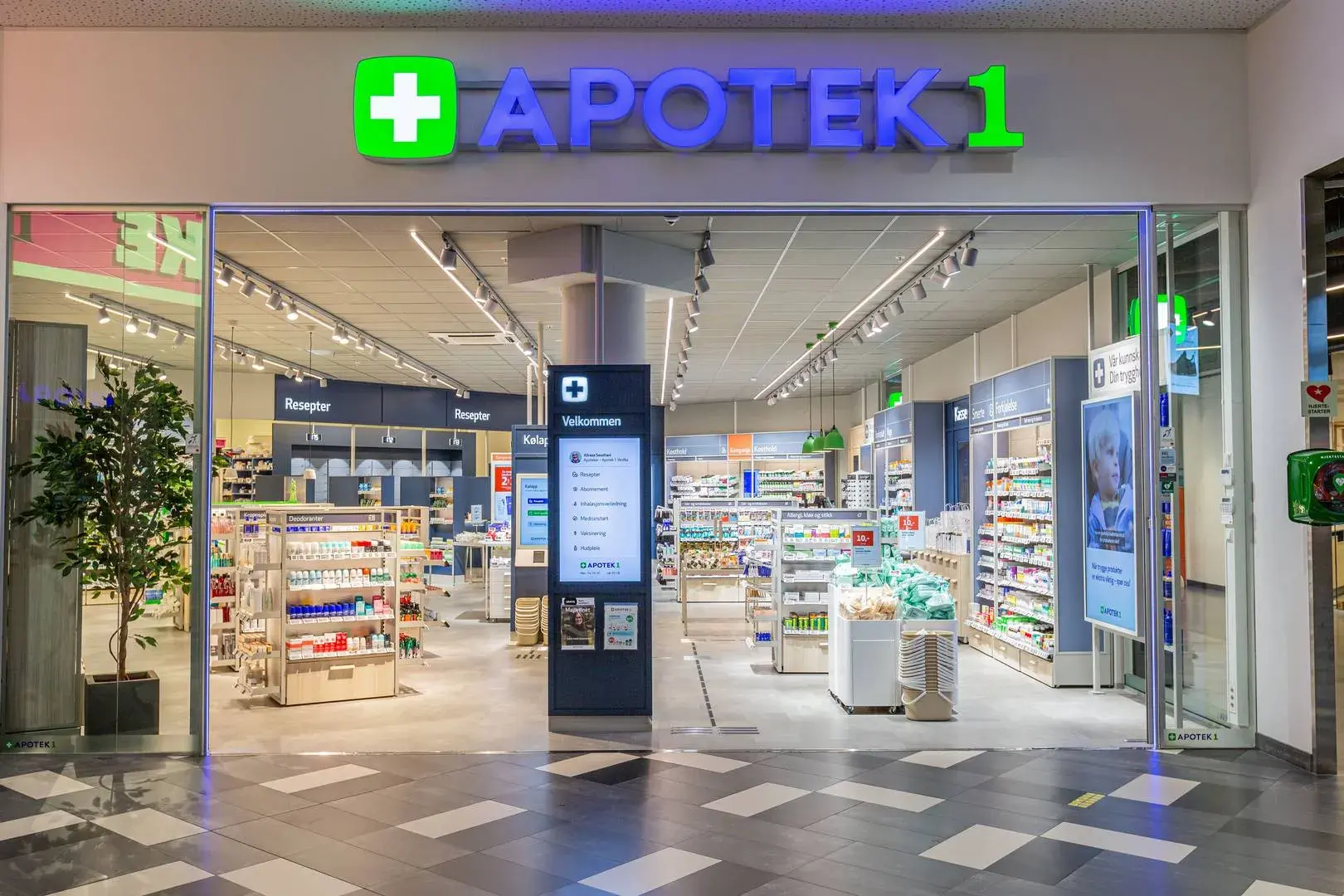
The retail industry is in the midst of a sustainability revolution. Consumers expect more sustainable products and services, while authorities are setting increasingly strict requirements. At the same time, costs for rebuilding and upgrading physical stores are increasing in line with higher material costs.
According to Virke, over 50% of Norwegian retail companies believe that it is important to become more climate and environmentally friendly, and 19% consider it critically important. The issue of sustainability is not only a question of reputation, it is also a question of competitive advantage.
The myth of expensive and complicated reuse
Traditionally, store upgrades have meant "throw away the old, and buy new". Many have believed that reuse is more expensive and time-consuming. Experience from the pharmacy chain Apotek 1 proves that this myth is wrong. When the chain upgrades to a new store concept, large parts of the interior are reused, renovated and adapted to the new design profile, which has yielded results:
- At least 20% lower costs compared to buying everything new.
- 122 tons of CO₂ saved and 50 tons less waste.
These are documented figures from the project, which show that sustainable solutions provide both environmental savings and direct economic benefits.
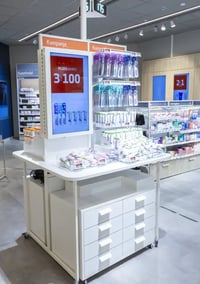

New concept of store interior design at Apotek 1 (Photo: Retailmagasinet)
How to succeed with reuse in retail?
Reuse requires more than just good intentions. To succeed with reuse, structure, logistics and documentation is also required. Apotek 1 has worked with two key partners:
Ombrukslageret AS, which handles interim storage, cleaning, repainting, documentation and logistics of interior design.
Loopfront AS, which supplies the digital platform that supports the entire process of providing an overview and documenting the savings.
By combining physical reuse with digital tools, Apotek 1 has gained control over both costs and sustainability goals. This is not only an environmental benefit, it is also a business benefit.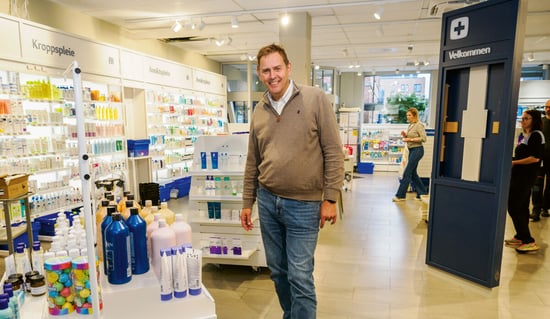
Reidar Dahlmann, CEO at Ombrukslageret AS (Photo: Retailmagasinet)
Systematics give results
Ombrukslageret AS has developed a hierarchy for reuse:1. Reuse within the chain: components are repaired and adapted to new designs across projects in the store chain
2. Surpluses are given new life by other companies: equipment that does not fit into the chain's new concept finds new uses.
3. Sorting and material recycling: sorting wood, plastic and electronics to minimize residual waste.
Loopfront's role is to digitize the process: by registering the store furnishings, calculating CO₂ savings and documenting the effect. This gives the chain the necessary reporting, control and reduces the time to implement reuse.
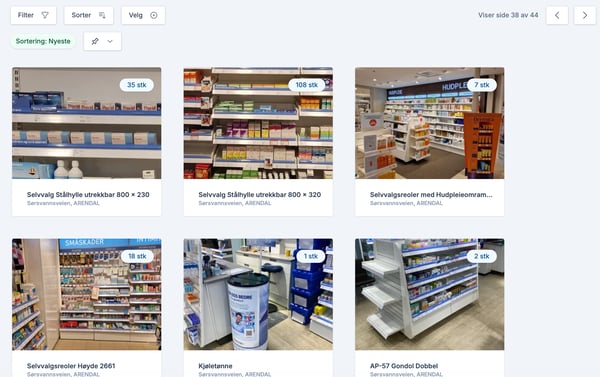
Example of store interior design registered in Loopfront.
What does this mean for the retail industry?
The results from Apotek 1 show that reuse can be integrated into the chain's operations, without compromising quality or delivery, while also providing:
-
Lower investment costs
-
Reduced climate footprint and waste
-
Better sustainability reporting.
This is not only relevant for pharmacy chains. The entire retail industry can benefit from a structured approach to reuse. With the right system and technology, circular economy becomes part of the value chain, not an add-on.
Next steps
Loopfront has long worked with developers and public sector companies in Norway, Sweden and Germany. Now we are bringing our experience to the retail industry. Apotek 1 is one of our first customers in this sector, and the results speak for themselves: Reuse is not only possible, it is also profitable.
Do you want to know how your company can reduce costs and emissions through Reuse? Contact us at Loopfront, and we will help you turn sustainability into a competitive advantage!
Sources:
- Virke: Handlekraft – Bærekraft i norsk handel
- Opinion: Forbruker og bærekraft
- Retailmagasinet: Resepten på lønnsom ombruk
- Ombrukslageret AS and Loopfront documentation
Related Posts
What Is Reused the Most in 2026, and What Has the Greatest Impact?
Since we introduced automatic data suggestions in February for products registered in Loopfront, we ...
Bjarne in Trondheim municipality leads the way for reuse with Loopfront
In recent years, Trondheim Municipality has invested in large-scale circular economy, and reuse has ...
Tips: Create value from your reuse survey
Both Swedish and Norwegian legislation require that buildings facing demolition or major rebuilding ...