


8 min read
Since we introduced automatic data suggestions in February for products registered in Loopfront, we have obtained even more precise data on the reuse activities our users carry out on the platform.
In 2026, we’re already seeing clear patterns in what’s being reused the most and where the greatest savings in costs, waste, and emissions lie.
We’ve gathered insights from reuse through the Loopfront platform so far this year, including statistics on product categories, cost savings, and reductions in CO₂ and waste. This data can help companies prioritize what they should focus on to get the most out of reuse within their scope.
How much has been reused so far in 2026?
A total of 43,106 objects have been reused during the period January–June 2026. These are objects that have either been registered as moved for reuse, donated, ordered internally within an organization, or externally (between organizations). This corresponds to total savings of:
-
Approx. 6,7 million EUR saved in reduced purchase costs.
-
Approx. 1,456 metric tons of CO2-eq saved by avoiding new production.
-
Approx. 728 metric tons of waste avoided through reuse.

What types of products are reused most often?
Loopfront utilizes over a hundred different product categories across furniture, fixtures, technical equipment, building materials, and more. We have examined which product categories were reused the most during the period Jan.–Jun. 2026:
1. Shelves (7,086 units)
2. Chairs (3,545 units)
3.Roofing (2,102 units)
4. Conference chairs (1,523 units)
5. Drawer units (1,484 units)
The categories most frequently reused are primarily furniture and fixtures, such as shelves, chairs, and tables. These are items that companies typically purchase on a per-employee basis and that are replaced regularly due to relocations, changes in headcount, or daily wear and tear.
At the same time, we see that roofing tiles rank high on the list of categories with the highest number of reused items.
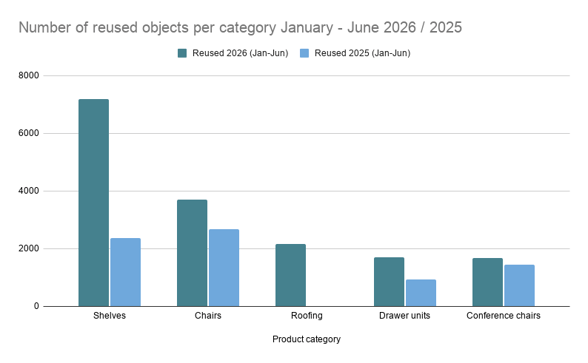
Furniture and fixtures are reused the most, but the share of building components is increasing
Furniture and fixtures still account for the majority of what is surveyed and reused. Nevertheless, we see that building materials and technical equipment in buildings account for a slightly larger share of what has been reused compared to the same period last year. This share has risen from 10% of all reused items in 2025 to 14% in 2026, which corresponds to approximately 2,000 more building components reused this year.
The proportion of surveyed building materials has also increased significantly over the past year, from 17% of all surveyed objects in 2025 to 25% in 2026.
What companies can learn from this data
Data from the first half of 2026 clearly show that a combination of high volume and a targeted focus on reusing high-value items is the key to success. By prioritizing both furniture and fixtures with a high turnover rate, as well as more valuable assets such as large and expensive furniture, building components, and technical equipment, companies can maximize their savings in cost, CO₂, and waste.
Compared to 2025, we see a positive trend where the reuse of building materials is now beginning to account for a larger share of the overall picture, which highlights the value of having a comprehensive reuse strategy for multiple product types.
Read our reports on reuse within your scope
We have compiled several insights and analyses on the reuse of furniture and fixtures, building components and technical equipment, as well as reuse in the healthcare sector.
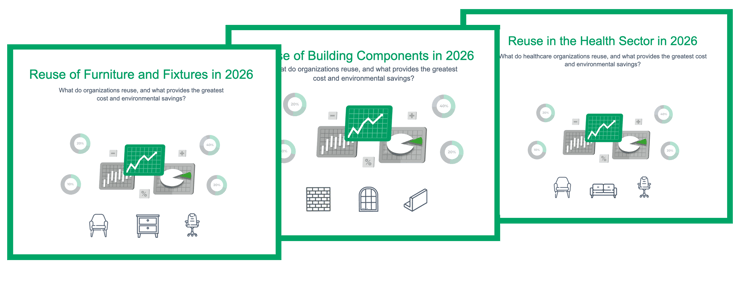
In these reports, you can read more about:
-
Several examples of products with high turnover rates and average savings in costs, emissions, and waste.
- Examples of products with significant untapped potential (products that are reused to a lesser extent but have a significant impact on cost and environmental savings).
-
Recommendations on which products to focus on, different operating models, and practical steps toward systematic reuse.
Do you have any questions, are you interested in learning more about reuse or Loopfront, or would you like to become a customer or partner?
Get in touch with us!
Related Posts
Bjarne in Trondheim municipality leads the way for reuse with Loopfront
In recent years, Trondheim Municipality has invested in large-scale circular economy, and reuse has ...
Better Buildings with Reuse
SINTEF writes in their report, Reuse of building materials - Market, drivers and barriers, about ...
Reuse in retail: from cost to competitive advantage
The retail industry is in the midst of a sustainability revolution. Consumers expect more ...