


6 min read
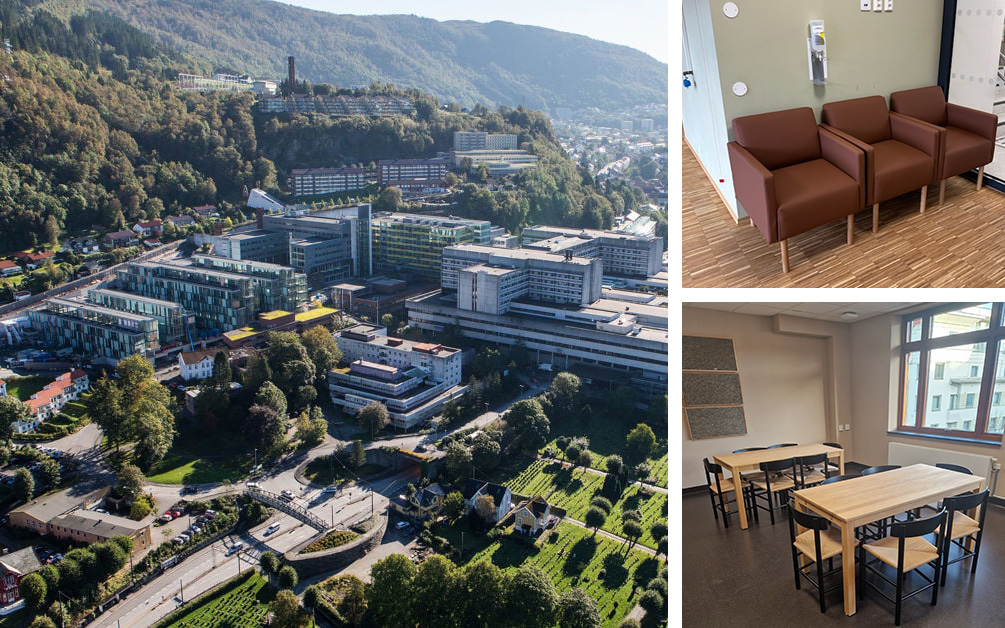
When finances are tight and the areas are large, you need both system and structure to achieve effective reuse. Helse Bergen has shown how this can be done, with impressive results.
Since 2023, the health trust company has saved NOK 25.8 million, 413 tonnes of CO₂, and avoided 171 tonnes of waste through smarter management and reuse of furniture and fixtures.
Reuse in projects and operations
At Helse Bergen, reuse is a natural part of new construction, renovation, and day‑to‑day operations. The savings are split roughly 50/50 between projects and daily operations.
In their latest construction project, they achieved as much as 99% reuse, thanks to involving the reuse coordinator early in the project phase. Wherever it is economically viable, furniture is cleaned (done in‑house), repaired, or redesigned.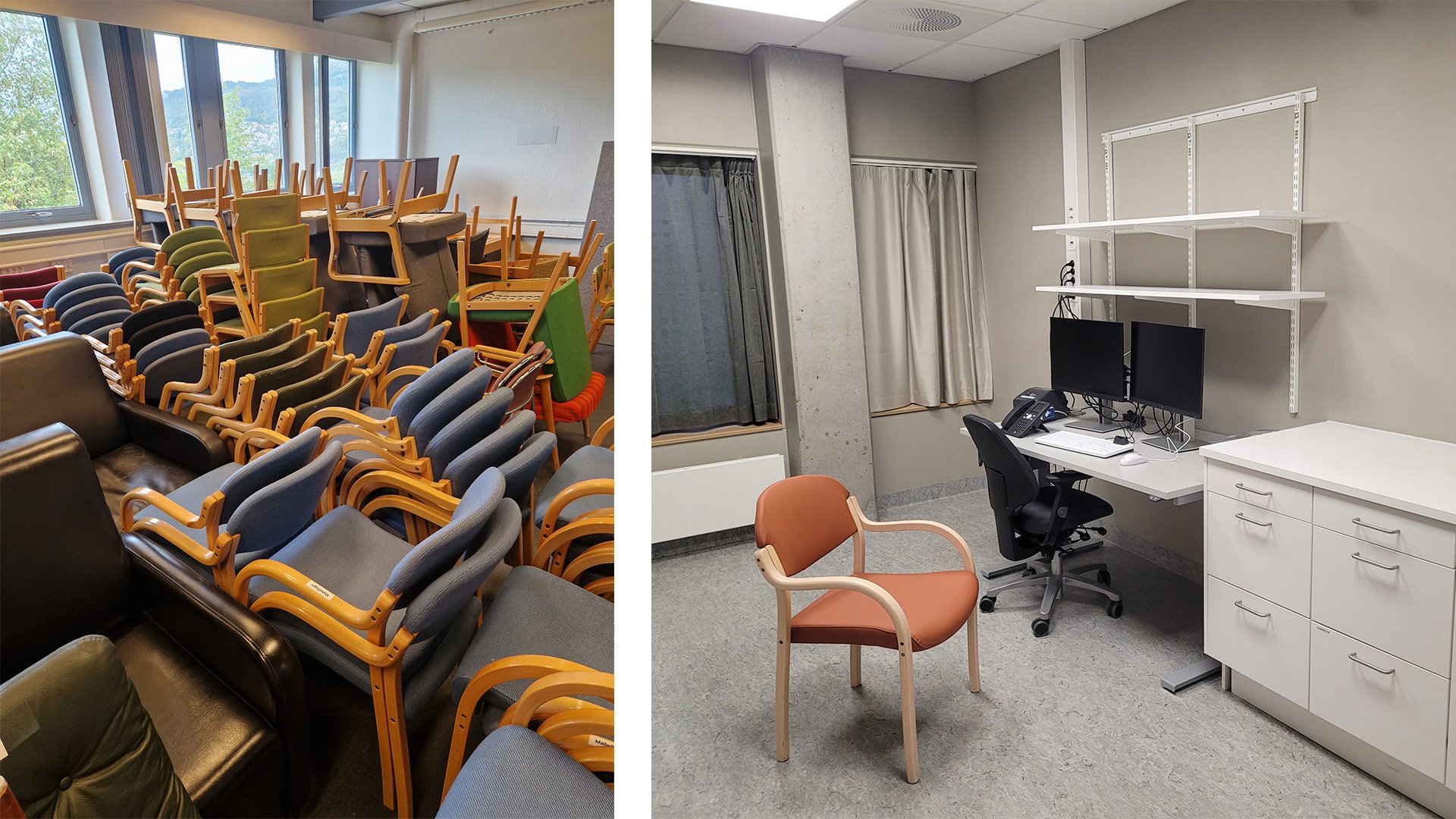 (Photo: Helse Bergen HF)
They also receive surplus furniture from moving companies on an ad hoc basis and exchange furniture with other public organisations in the region (the University of Bergen, Bergen municipality, etc.).
Structure and systematisation of reuse
Reuse is organised under the Area Management (Property Management) department at Helse Bergen, and the work is led by Thomas Tellefsen Rokstad, a dedicated full‑time reuse coordinator.
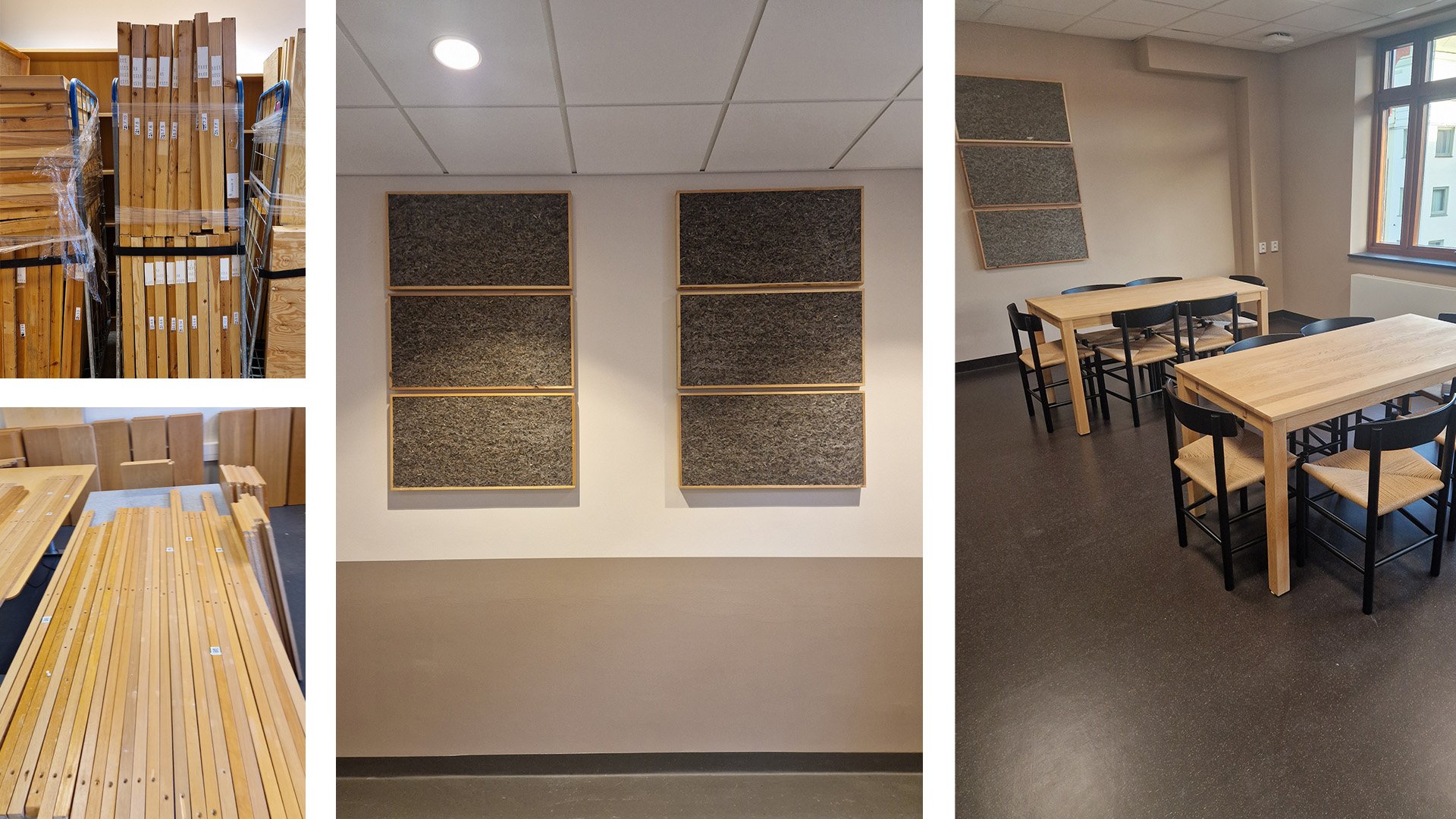
The reuse warehouse collects, registers, and delivers furniture, while the end user receives the furniture free of charge but covers the transport cost. The transport is currently carried out by an external moving company; previously, this was done internally.
In the future, Helse Bergen wants to use Loopfront even more directly in the workflow.
"Without the Loopfront platform, we would never have been able to achieve this high level of reuse activity with our limited resources. The platform is easy to use, and Loopfront listens and responds to my needs"
- Thomas Tellefsen Rokstad
(Reuse coordinator, Helse Bergen HF)
Future posibilities of reuse
After achieving major gains with reuse of furniture, Helse Bergen is now looking at how reuse can be expanded to more categories:
- Medical technical equipment: Can be reused within the current workflow, and is assumed to offer significant savings potential.
- Building materials: Municipalities have shown that this offers major savings in projects and maintenance.
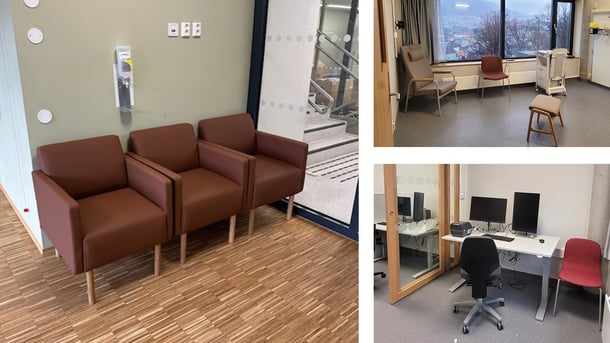
Key learnings from reuse at Helse Bergen HF
The results from reuse at Helse Bergen HF show major environmental benefits, better resource utilisation across departments, and, not least, important learnings:
-
Significant savings, both financial and environmental, can be achieved without major process changes, but having a reuse coordinator has been crucial.
-
It is important to consider reuse both in day‑to‑day operations and in projects.
-
The experience shows that reuse can easily be scaled to new categories such as medical equipment and building materials.
Would you like to learn more about how Loopfront can help your organisation systematise reuse? We’d be happy to set up a meeting with you!
Related Posts
Recycled artificial turf pitches at half price
Worn out artificial turf pitches have become one of the biggest unaddressed environmental problems ...
Smart solutions for successful reuse in Halden municipality
Halden Municipality had a lot of furniture and fixtures in an empty school building, but lacked the ...
How Ullensvang Municipality Saved Over One Million in Less Than a Year
Ullensvang Municipality started using Loopfront at the end of 2024. Just over a year later, they ...